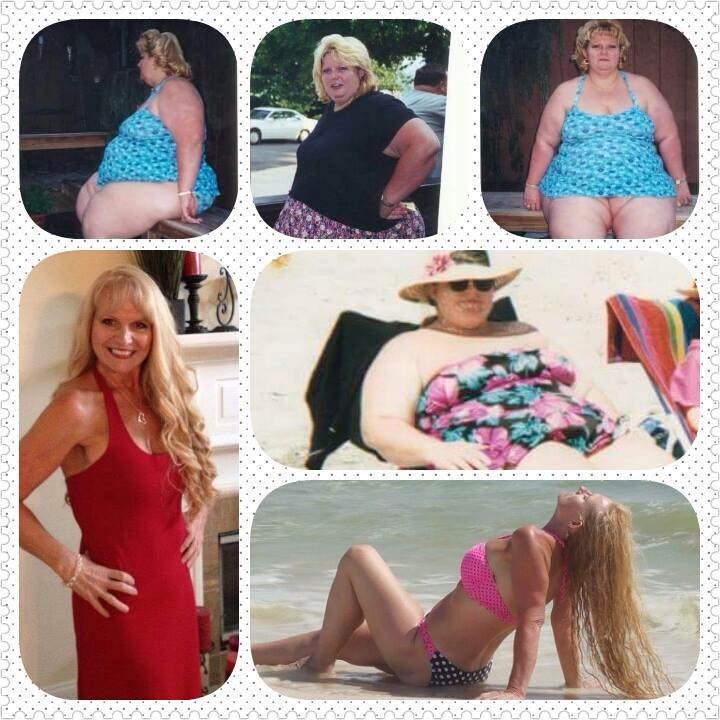
Sometimes I wonder if studies really show how unsafe it was for someone like me to stay obese....and how much better the quality of life is for me now! Most of the time we only hear the bad outcomes of Weight Loss Surgery not the wonderful benifits people have after Weight Loss Surgery. I thank God everyday that I had the opportunity to have Weight Loss Surgery! Take a look at this article.....
Hugs,
Ginger
Study Finds Weight-Loss Surgery Safer Than Thought
Death risk only 0.3 percent, chances of serious complications 4.3 percent
URL of this page: http://www.nlm.nih.gov/medlineplus/news/fullstory_87501.html (*this news item will not be available after 10/27/2009)
HealthDay
Wednesday, July 29, 2009
WEDNESDAY, July 29 (HealthDay News) -- For those considering bariatric surgery to combat significant obesity, a new study suggests the risk of complications may be much lower than what has previously been reported.
The study, which looked at both gastric bypass surgery and laparoscopic adjustable gastric banding (lap-band surgery), found that the risk of death for these surgeries was 0.3 percent and the risk of a major adverse outcome was 4.3 percent.
"Bariatric surgery is safe," said study co-author Dr. Bruce Wolfe, a professor of surgery at Oregon Health & Science University in Portland. "Certain factors [such as a history of blood clots, obstructive sleep apnea or impaired functional status] increase the risk of complications, but you can discuss these risks as well as the potential benefits with your surgeon."
Results of the study appear in the July 30 issue of the New England Journal of Medicine.
As obesity rates have risen, so, too, has the popularity of bariatric surgery. Although it is a major surgical procedure, the benefits to the severely obese generally far outweigh the risks. In fact, the risk of death over time is about 35 percent lower for someone who's had the surgery compared to someone who remains extremely obese, according to background information in the study.
However, the surgery isn't for everyone. "If you're five or 10 pounds overweight, bariatric surgery isn't for you," said Dr. Malcolm K. Robinson, an assistant professor of surgery at Harvard Medical School, and the author of an accompanying editorial in the same issue of the journal.
"Basically, when I or my colleagues advise surgery, it's because the benefits of surgery outweigh the risks. In general, that's the case for someone with a BMI [body-mass index] of 35 and weight-related health problems like diabetes or high blood pressure, or someone with a BMI of 40 or more," said Robinson, who added that as the risks of the surgery keep dropping, those BMI numbers may get even lower in the future.
The current study included 4,776 people who underwent one of the following types of bariatric surgery: lap-band surgery (1,198 patients), laparoscopic gastric bypass (2,975 patients), open gastric bypass (437 patients) or another procedure (166 patients). All of the surgeries were done by surgeons specifically qualified for this study. All of the surgeries took place between March 2005 and December 2007.
The average age of the study participant was 44.5 years old, 22 percent of the study volunteers were male and 11 percent were nonwhite. The average BMI in the study was 46.5. More than half of the study group had at least two coexisting medical conditions, the study authors noted.
In his editorial, Robinson points out that these procedures may represent "best-case scenarios" because they were done by experienced surgeons in high-volume bariatric centers. However, he said that because the field of bariatric surgery has advanced so much in the past few years, he believes these results are a "generally achievable phenomenon."
Both Robinson and Wolfe recommend that any person considering bariatric surgery should choose a facility that's been designated as a "Center of Excellence" because that means that the surgeon and the whole health-care team are qualified and experienced.
SOURCES: Bruce Wolfe, M.D., professor, surgery, Oregon Health and Science University, Portland, Ore.; Malcolm K. Robinson, M.D., assistant professor, surgery, Harvard Medical School and Brigham and Women's Hospital, Boston; July 30, 2009, New England Journal of Medicine
HealthDay
Copyright (c) 2009 ScoutNews, LLC. All rights reserved.
Monday, August 31, 2009


As Waistlines Widen, Brains Shrink
Now more than ever we read more and more studies of how obesity is so harmful to our health. I know that when I was obese not only did I look older, but I felt older because of the limited mobility I had and lack physical activity I was able to do.
Now, at average weight I feel like there is no limitation on what I can do physically. I realize I get older every day but since I feel so good, I forget I am almost 50 years old....It is only a number....and I intend to keep working hard and staying fit for a long time.
Read the article below and share with all you know how important it is to get the WEIGHT OFF AND KEEP IT OFF.
Much love,
Ginger
As Waistlines Widen, Brains ShrinkWEDNESDAY, August 26 (HealthDay News) – For every excess pound piled on the body, the brain gets a little bit smaller. That's the message from new research that found that elderly individuals who were obese or overweight had significantly less brain tissue than individuals of normal weight.
"The brains of obese people looked 16 years older than their healthy counterparts while [those of] overweight people looked eight years older," said the senior author of the study published online in Human Brain Mapping. The findings could have serious implications for aging, overweight or obese individuals, including a heightened risk of Alzheimer's, the researchers said.
http://www.nlm.nih.gov/medlineplus/news/fullstory_88574.html
Now, at average weight I feel like there is no limitation on what I can do physically. I realize I get older every day but since I feel so good, I forget I am almost 50 years old....It is only a number....and I intend to keep working hard and staying fit for a long time.
Read the article below and share with all you know how important it is to get the WEIGHT OFF AND KEEP IT OFF.
Much love,
Ginger
As Waistlines Widen, Brains ShrinkWEDNESDAY, August 26 (HealthDay News) – For every excess pound piled on the body, the brain gets a little bit smaller. That's the message from new research that found that elderly individuals who were obese or overweight had significantly less brain tissue than individuals of normal weight.
"The brains of obese people looked 16 years older than their healthy counterparts while [those of] overweight people looked eight years older," said the senior author of the study published online in Human Brain Mapping. The findings could have serious implications for aging, overweight or obese individuals, including a heightened risk of Alzheimer's, the researchers said.
http://www.nlm.nih.gov/medlineplus/news/fullstory_88574.html
Thursday, August 27, 2009
Blueberry Tart with Walnut Crust
Hello,
Some People call it a Tart I call it a cobbler. Anyway, I hope you enjoy it!
Hugs,
Ginger
Blueberry Tart with Walnut Crust
Ingredients
Crust
1 cup crushed walnuts,
1 large egg white
1 tablespoon butter, melted
1 tablespoon canola oil
Pinch of salt
Filling
8 ounces reduced-fat cream cheese (Neufchâtel), softened
¼ cup reduced-fat sour cream
¼ cup plus 2 tablespoons splenda, divided
2 cups fresh blueberries
Blueberry Tart with Walnut Crust Ingredients Cont.
Instructions 1. To prepare crust: Preheat oven to 325°F.
2. Coarsely chop walnuts in a food processor.
3. Whisk egg white in a medium bowl until frothy. Add the crumb mixture, butter, oil and salt; toss to combine. Press the mixture into the bottom and 1/2 inch up the sides of a 9-inch removable-bottom tart pan. Set the pan on a baking sheet. Bake until dry and slightly darker around the edges, about 8 minutes. Cool on a wire rack.
4. To prepare filling: Beat cream cheese, sour cream and 1/4 cup splenda in a medium bowl with an electric mixer on low speed until smooth. When the crust is cool, spread the filling evenly into it, being careful not to break up the delicate crust. Arrange blueberries on the filling, pressing lightly so they set in. Sprinkle the remaining 2 tablespoons splenda over the berries. Chill for at least 1 hour to firm up.
Blueberry Tart with Walnut Crust
Instructions Cont.
Tips
Refrigerate for up to 1 day. | Equipment: 9-inch removable-bottom tart pan
Tip: To toast walnuts, spread on a baking sheet and bake at 350°F, stirring once, until fragrant, 7 to 9 minutes.
Some People call it a Tart I call it a cobbler. Anyway, I hope you enjoy it!
Hugs,
Ginger
Blueberry Tart with Walnut Crust
Ingredients
Crust
1 cup crushed walnuts,
1 large egg white
1 tablespoon butter, melted
1 tablespoon canola oil
Pinch of salt
Filling
8 ounces reduced-fat cream cheese (Neufchâtel), softened
¼ cup reduced-fat sour cream
¼ cup plus 2 tablespoons splenda, divided
2 cups fresh blueberries
Blueberry Tart with Walnut Crust Ingredients Cont.
Instructions 1. To prepare crust: Preheat oven to 325°F.
2. Coarsely chop walnuts in a food processor.
3. Whisk egg white in a medium bowl until frothy. Add the crumb mixture, butter, oil and salt; toss to combine. Press the mixture into the bottom and 1/2 inch up the sides of a 9-inch removable-bottom tart pan. Set the pan on a baking sheet. Bake until dry and slightly darker around the edges, about 8 minutes. Cool on a wire rack.
4. To prepare filling: Beat cream cheese, sour cream and 1/4 cup splenda in a medium bowl with an electric mixer on low speed until smooth. When the crust is cool, spread the filling evenly into it, being careful not to break up the delicate crust. Arrange blueberries on the filling, pressing lightly so they set in. Sprinkle the remaining 2 tablespoons splenda over the berries. Chill for at least 1 hour to firm up.
Blueberry Tart with Walnut Crust
Instructions Cont.
Tips
Refrigerate for up to 1 day. | Equipment: 9-inch removable-bottom tart pan
Tip: To toast walnuts, spread on a baking sheet and bake at 350°F, stirring once, until fragrant, 7 to 9 minutes.
Subscribe to:
Posts (Atom)